This NFT gives you your money back when someone takes it from you.

1,000 people will lock SOL into a smart contract. Each will receive an AI-generated Baroque oil portrait derived from their own likeness. Any of them can be displaced at any time by someone willing to lock more. The displaced party receives a full refund. No capital is lost. Only position.

SOLAZZO

Whitepaper v1 — A Conviction-Based NFT Collection on Solana

1.

Abstract

Solazzo is a collection of 1,000 competitive NFT slots on Solana where ownership is earned through locked capital rather than purchased through a fixed mint price. Participants claim and defend slots by locking SOL into a smart contract. At any moment, the owner of a slot is the participant who has committed the highest amount of SOL to it.

Locked capital remains fully refundable. Upon displacement or settlement, participants receive exactly the amount of SOL originally locked. The system deploys locked capital into liquid staking infrastructure, capturing staking yield while preserving principal guarantees. All staking rewards accrue to the Solazzo treasury.

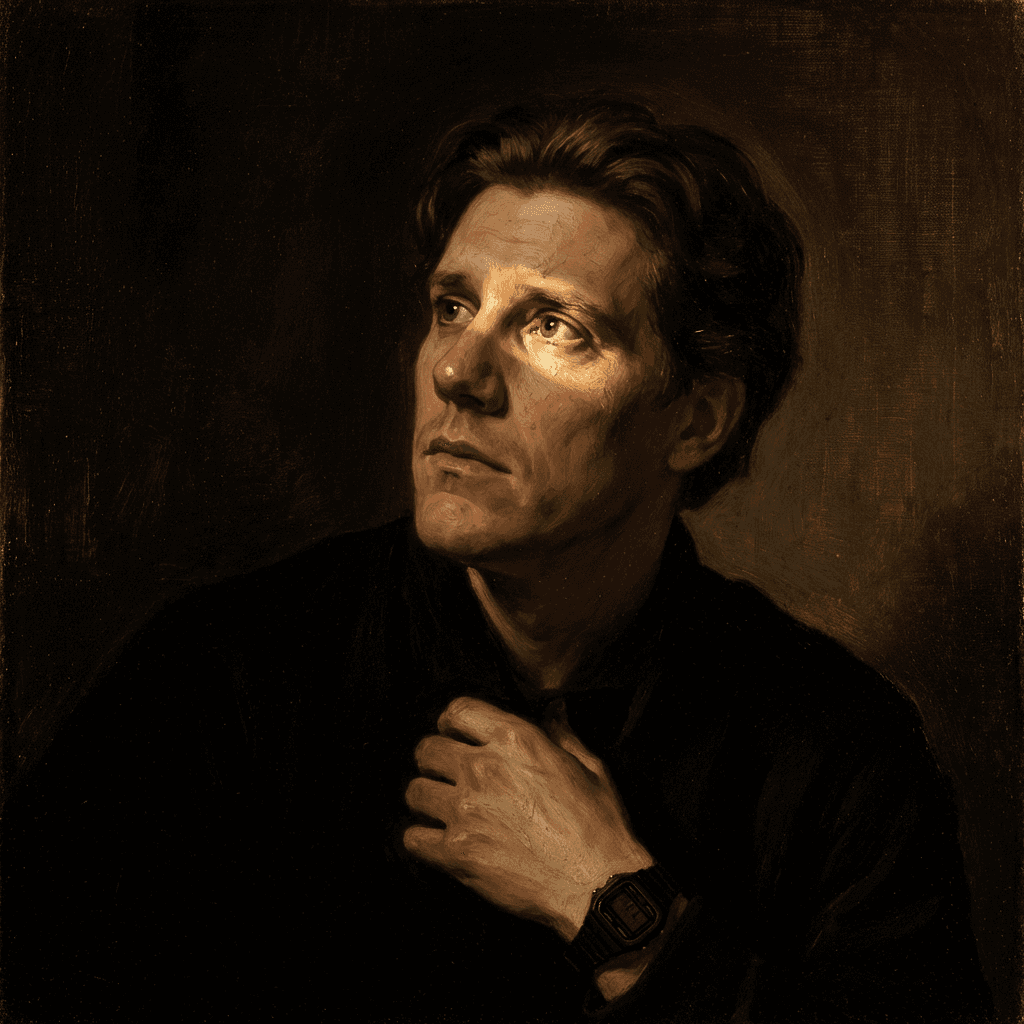
Each slot is represented by a personalized, AI-generated oil portrait derived from the current owner’s headshot. The portrait evolves across five predefined stages tied to SOL price milestones, forming a narrative arc from humble belief through excess to reflective realization.

Solazzo unifies economic conviction, social signaling, and narrative progression into a single system. Ownership is dynamic. Identity is personalized. Wealth is expressed visually but ultimately interrogated.

2.

Conviction Under Uncertainty

Crypto markets are environments of radical uncertainty. Participation requires committing capital to an outcome that is probabilistic, reflexive, and narrative-driven. Conviction is therefore not a static opinion but an ongoing decision to remain exposed.

Solazzo formalizes that condition.

Ownership is not purchased once and held passively. It must be continuously defended. Capital is locked, not spent. Displacement is always possible. The cost of ownership is the opportunity cost of liquidity and the risk of being outbid.

Conviction is measurable because it is denominated in locked SOL. It is contestable because another participant may commit more. It is visible because ownership is represented publicly as an evolving portrait.

The staking mechanism expresses conviction economically. The portrait system expresses it psychologically. The settlement condition expresses its temporal limits.

Rather than promising permanent dominance, the system models exposure, escalation, competition, and reflection. It encodes the lived emotional arc of speculative markets into deterministic rules.

The NFT becomes a proof of stake in both senses: financial commitment and ideological commitment.

3.

System Architecture

Solazzo consists of 1,000 NFT slots deployed on Solana. Each slot represents a competitive staking position and an associated evolving portrait.

Each slot maintains on-chain state including the current owner, the locked amount of SOL, timestamps, and a metadata reference. Ownership is assigned to the participant with the highest locked amount for that slot.

The system integrates:

These components operate cohesively rather than independently. Economic behavior determines identity. Market conditions determine visual evolution.

4.

Lock-to-Own Mechanism

Ownership of a slot is established by locking SOL into the Solazzo contract. If a slot is unowned, any participant may claim it by locking a positive amount of SOL. If a slot is already owned, a new participant must lock an amount that exceeds the existing locked amount according to a minimum increment rule.

The minimum increment rule prevents trivial displacement and excessive churn. By default, a new lock must exceed the prior lock by at least one percent or by a fixed minimum SOL increment, whichever is greater.

When a displacement occurs, ownership transfers immediately. The previous owner receives exactly the amount of SOL originally locked. No penalties, proportional reductions, or slippage are applied to refunded principal.

A small displacement fee may be applied to successful takeovers. This fee supports liquidity operations, covers execution costs, and discourages adversarial micro-bidding.

The NFT metadata reverts to a neutral placeholder upon ownership transfer until the new owner finalizes their portrait.

Ownership is therefore continuous and contestable. No participant forfeits capital; they forfeit position.

5.

Capital Deployment and Yield Accrual

Locked SOL is deployed into liquid staking infrastructure in order to generate staking rewards. The majority of locked capital is converted into liquid staking tokens, while a configurable portion remains in a SOL liquidity buffer.

The liquidity buffer ensures that displaced participants can be refunded instantly in SOL. When buffer levels fall below a defined threshold, batched swaps from liquid staking tokens back into SOL restore liquidity. Swaps are executed in aggregated batches to minimize slippage and transaction costs.

Participants are guaranteed the return of exactly the amount of SOL they locked. Staking rewards generated during the lock period accrue exclusively to the Solazzo treasury.

Revenue is therefore a function of total locked SOL, staking yield, and time. Sustainability derives from aggregate conviction rather than mint proceeds.

Principal protection, yield segregation, and buffer solvency are core invariants of the system.

6.

Settlement Condition

Solazzo defines a terminal milestone at SOL reaching $1,000, as determined by a specified oracle feed.

Upon confirmation, Solazzo enters a settled state. New locks and displacements are disabled. Each current owner may withdraw their locked SOL principal. A final liquidity rebalance ensures sufficient funds for withdrawals. Staking rewards accumulated up to this point remain in the Solazzo treasury.

The settlement condition concludes the competitive phase. Capital is returned. Yield remains as the residue of time and belief.

7.

Personalized Portrait System

Each Solazzo slot is visually represented by a personalized oil portrait derived from the current owner’s headshot. Portrait generation is asynchronous and occurs off-chain.

Upon acquiring a slot, the NFT displays a neutral placeholder. The owner may enter a portrait studio to generate a five-stage portrait set. Generation is permitted once per ownership cycle. If ownership is lost before finalization, the session becomes invalid.

Headshot uploads are processed ephemerally and are not permanently stored. Only the finalized stylized outputs are retained. Portrait generation includes limited draft iterations per ownership cycle, followed by a single high-resolution finalization.

The five portraits correspond to predefined narrative stages. All five are generated at finalization and stored in decentralized storage. The NFT dynamically displays the appropriate stage based on SOL price milestones.

8.

The Five-Stage Evolutionary Arc

The portrait system encodes a structured psychological progression aligned with SOL price milestones. Each $200 increase in SOL advances the entire collection to the next stage.

Stage I — The Humble Believer

Stage I, below $200 SOL, presents the subject as a humble believer. Clothing is restrained. Ornamentation is minimal. The expression conveys quiet conviction rather than dominance.

Stage II — Emerging Confidence

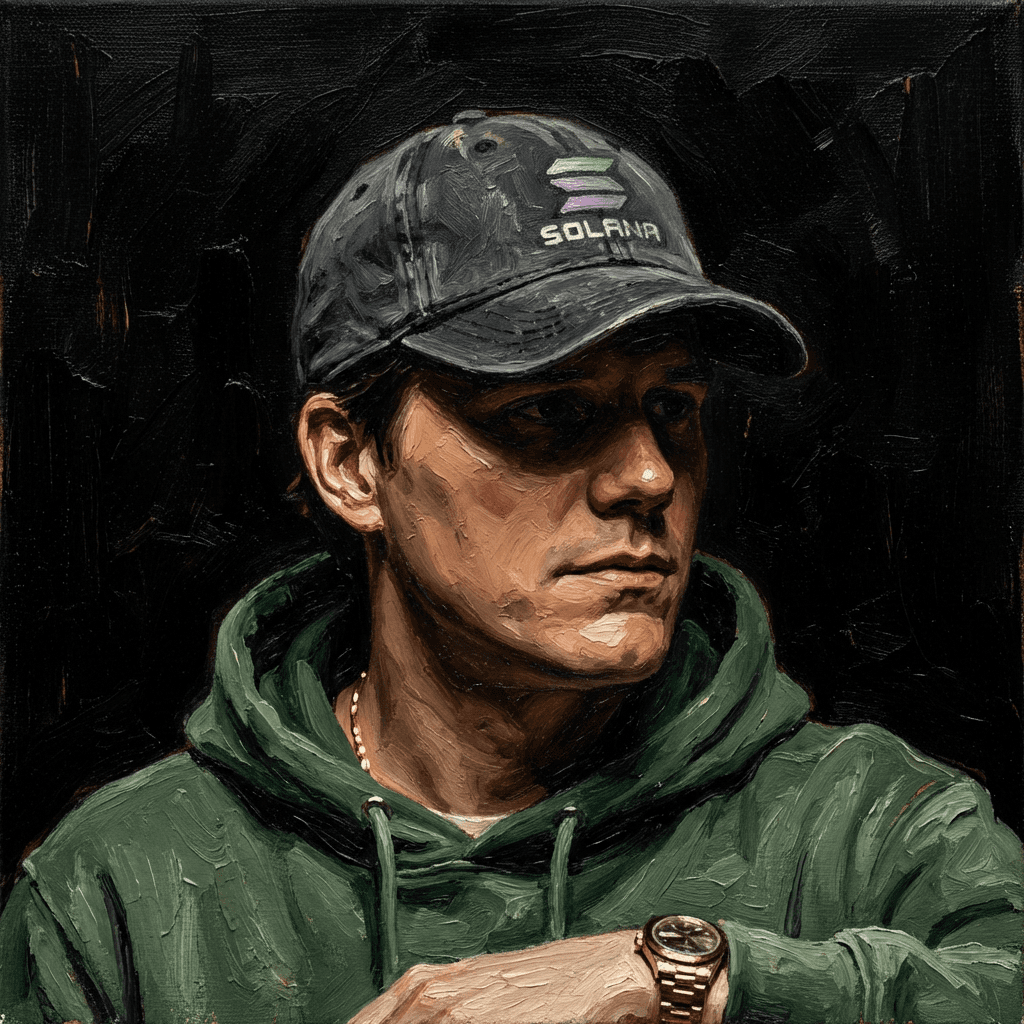
Stage II, between $200 and $399 SOL, introduces subtle signals of improvement. Fabrics refine. Accessories appear. Posture becomes more upright. Confidence emerges.

Stage III — Established Wealth

Stage III, between $400 and $599 SOL, represents established wealth. Jewelry becomes explicit. Lighting intensifies. The subject appears accomplished and assured.

Stage IV — Maximal Expression

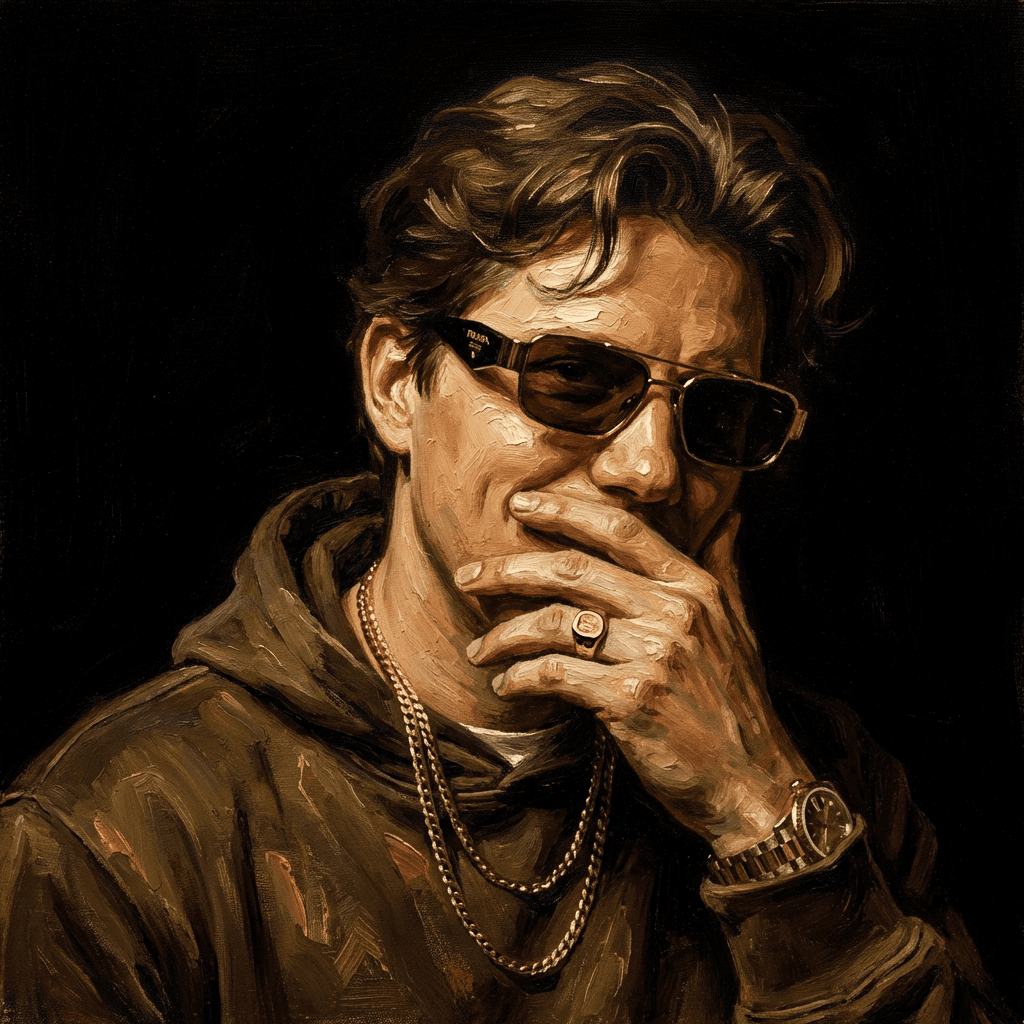
Stage IV, between $600 and $799 SOL, embodies maximal expression. Diamond grills, layered chains, and culturally recognizable accessories appear in their most theatrical form. Lighting becomes dramatic and flash-like. The portrait embraces spectacle and visible abundance.

Stage V — Reflection

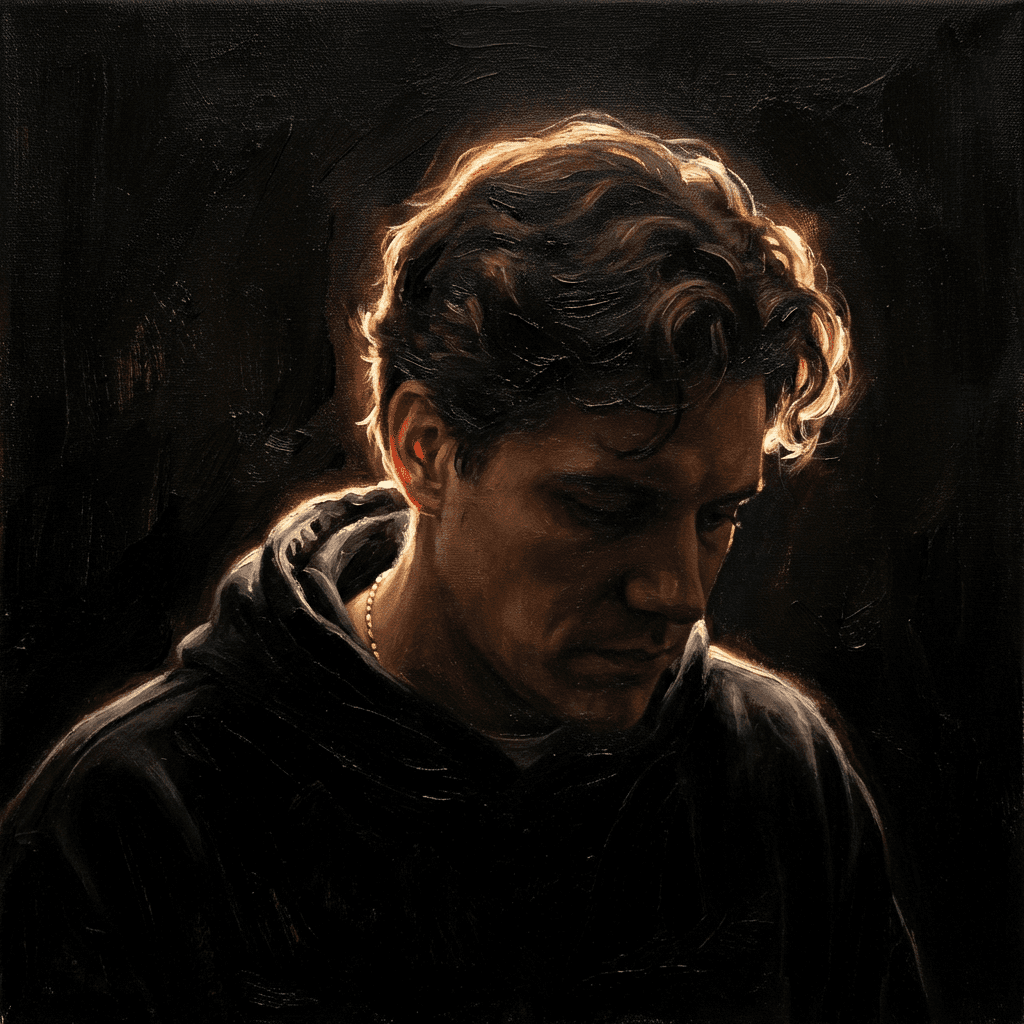
Stage V, between $800 and $1,000 SOL, shifts the emotional register. The overt spectacle recedes. Ornamentation softens. The expression becomes contemplative. There is wisdom without sanctification, composure without triumph. The subject appears aware that accumulation does not resolve longing. Wealth has been experienced; excess has been performed; what remains is perspective.

This final stage introduces maturity rather than infinite escalation. The arc mirrors market psychology: belief, growth, dominance, excess, and reflection.

9.

Lock Amount as Aesthetic Ceiling

Stage progression is determined by global SOL price and applies equally to every portrait in the collection. But within each stage, the amount of SOL locked by an individual owner determines the aesthetic ceiling of their specific portrait.

This is not a cosmetic distinction. It is a design principle: conviction should be visible in the work itself. Two portraits rendered at Stage III may occupy the same narrative position — established wealth — while expressing it at different levels of refinement. A lower lock produces a portrait that is accomplished and assured. A higher lock produces one that is intricate, textured, and ornamented beyond the baseline.

In practice, this means higher locked capital unlocks richer brushwork detail, rarer accessories, more complex layering of jewelry and fabric, and premium ornamentation tiers unavailable at lower amounts. At Stage IV, for example, a minimum lock renders diamond grills and chains in their standard theatrical form. A significantly higher lock adds iced-out watches, Solana-branded eyewear, and a more dramatic flash-lit composition with greater painterly complexity.

Price determines narrative position. Locked capital determines stylistic refinement. The portrait is therefore a dual record: of where the market stands, and of how much the individual committed.

10.

Cultural Positioning

The decision to build Solazzo around Baroque and Renaissance oil portraiture was not aesthetic preference. It was conceptual precision.

For centuries, the painted portrait was the primary technology of status. Commissioned by merchants, aristocrats, and rulers, these works performed a specific function: they made power legible, projected permanence, and transformed the transient accumulation of wealth into something that looked like it had always existed. Caravaggio, Rembrandt, Velázquez — the masters of this tradition were not simply skilled painters. They were the infrastructure through which elites constructed their public identity.

Crypto participation involves a structurally similar impulse. Capital is committed to narratives that may or may not resolve. Identity becomes entangled with positions. Conviction is performed publicly, through wallets and social feeds, in ways that are simultaneously sincere and theatrical. The degen and the aristocrat are separated by four hundred years and a very different set of accessories, but they share the same underlying desire: to make belief visible, to have the external world reflect an internal commitment.

Solazzo takes this seriously rather than laughing at it. The visual language — chiaroscuro lighting, dark backgrounds, cracked-canvas texture, psychologically charged expressions — is applied without irony to subjects wearing diamond grills, iced-out watches, and Solana-branded eyewear. The result is controlled irony rather than parody. The portraits are not making fun of crypto culture by dressing it in classical clothing. They are asking what it looks like when the oldest tradition of status portraiture encounters the newest. The answer, it turns out, is not absurd. It is strangely coherent.

This coherence is what makes the format work as identity. A cartoon avatar signals community membership. A Baroque oil portrait derived from your own likeness signals something else — a claim to permanence, a willingness to be rendered seriously, a particular relationship to your own conviction. Holders who adopt their portrait as their PFP are not being ironic. They are using the oldest tool in the status repertoire, updated for the current moment.

The style also provides durability. Trends in generative art move fast. The Baroque does not. A portrait painted in this tradition in 2026 will not look dated in 2030 in the way a pixelated avatar or a procedurally generated cartoon might. The oil painting format anchors Solazzo in a visual tradition with historical depth rather than cycle-dependent aesthetics.

11.

Conclusion

Solazzo introduces a conviction-based NFT collection in which ownership is dynamic, principal is protected, yield sustains the system, and identity evolves with market conditions.

The NFT is not a static collectible. It is a live staking position rendered as an evolving portrait. Conviction is quantified economically and expressed visually. The system encodes exposure, escalation, and reflection into deterministic rules.

Ownership is temporary. Conviction is continuous. Wealth is narrative rather than endpoint.

12.

Built For Collaborators

Solazzo is in active development. The implementation spans smart contract engineering, AI portrait generation, and frontend design — and the quality of each depends on the people who build it.

If you are reading this document as a potential collaborator, this is what the project requires:

On the technical side: a Solana smart contract engineer fluent in Rust and Anchor to own the lock-to-own mechanism, liquid staking integration, and on-chain security; a full-stack engineer to build the wallet-connected frontend, portrait studio, and metadata engine; and an AI/ML engineer experienced with diffusion models, LoRA training, and face preservation techniques to develop the portrait generation pipeline.

On the creative side: an art director or painter with a genuine relationship to Baroque and Renaissance oil painting who can define the visual language systematically, curate the training dataset, and ensure that the aesthetic holds across five stages and thousands of unique portraits.

The project brief, implementation plan, and reference images are available on request.